Understanding what drives commercial parking lot paving pricing before requesting project bids can help you plan your budget. Factors like sub-base conditions, drainage, traffic loads, and ADA compliance all affect the scope of work, making it difficult to compare estimates if you don’t know what to look for.
With decades of experience serving commercial property managers, HOAs, municipalities, school districts, and businesses throughout Virginia and the Mid-Atlantic, Finley Asphalt & Concrete is here to help you make informed paving decisions. This budget-planning guide explains what commercial parking lot paving involves, what impacts project costs, and the standards every property owner should know before requesting a quote.
What Commercial Parking Lot Paving Actually Involves
Commercial pavement withstands heavier traffic, larger vehicles, and stricter accessibility requirements than residential surfaces. A complete commercial paving project typically includes:
Site evaluation and grading
Sub-base preparation or repair
Drainage improvements
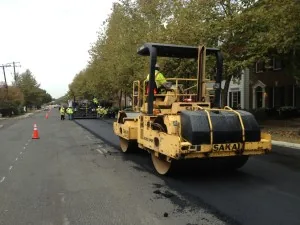
Asphalt installation
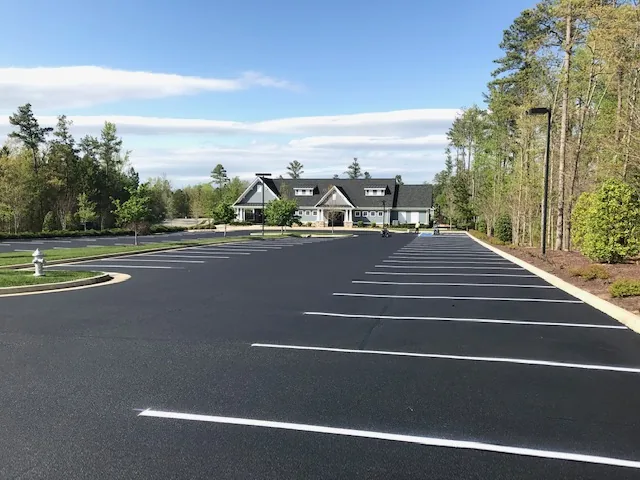
ADA-compliant parking layouts and signage
New Construction vs. Repaving
New Construction
New construction starts from the ground up. It requires excavation, grading, installation of a compacted aggregate base, and new asphalt. This approach is necessary for undeveloped sites or parking lots with severe structural failure or poor drainage.
Repaving
Repaving, often called a mill-and-overlay, removes 1.5 to 2 inches of worn asphalt surface and installs new asphalt while keeping the existing base in place. Repaving is often the most cost-effective option when the foundation is still structurally sound.
The Role of Sub-Base Quality
The compacted aggregate base underneath your pavement has the greatest impact on pavement lifespan. A properly prepared commercial parking lot generally includes a 6 to 8-inch compacted stone base designed for expected traffic. Delivery trucks, refuse vehicles, and heavy equipment may require thicker bases and stronger pavement structures than standard retail parking lots.
Many problems that appear to be “asphalt failures” actually begin below the surface. Potholes, rutting, and alligator cracking often develop because of poor compaction, unstable soils, or inadequate drainage rather than the asphalt itself.
What Drives Commercial Parking Lot Paving Costs
Commercial parking lot paving pricing depends on site conditions, project scope, and current material costs.
Lot Size and Square Footage
Larger projects often benefit from economies of scale.
Asphalt Mix Type and Thickness
Standard commercial lots typically receive multiple asphalt layers over a prepared base, while properties serving heavy truck traffic often require thicker pavement structures and asphalt mixes.
Site Conditions and Prep Work
Drainage issues, unstable subgrade soils, failed pavement sections, or significant grading corrections all require additional preparation before new asphalt can be installed.
The best way to get a reliable estimate is to schedule a professional site assessment.
Commercial Parking Lot Paving Standards to Know
A well-built parking lot must safely support traffic, manage stormwater, and comply with accessibility requirements. Following commercial parking lot paving standards during construction helps improve safety and minimize potential liability.
ADA Accessibility Requirements
Commercial parking lots must comply with the Americans with Disabilities Act (ADA), which establishes requirements for accessible parking spaces, access aisles, slopes, curb ramps, and signage. During a paving project, contractors should verify that parking layouts and pavement grades will continue to meet ADA standards after construction is complete.
Drainage and Stormwater Standards
Standing water is one of the leading causes of premature pavement deterioration. Proper grading allows water to flow toward catch basins and drainage structures instead of collecting on the pavement surface. Addressing drainage issues during construction helps extend pavement life by reducing the risk of potholes, cracking, and base failure.
Structural Thickness Standards
A retail shopping center, office complex, industrial facility, and municipal yard all experience different traffic loads that require different pavement designs. Heavier vehicles place greater stress on asphalt and often require thicker pavement sections and stronger aggregate bases. Designing the pavement for anticipated traffic helps maximize its service life and reduce long-term repair costs.
Common Mistakes That Lead to Costly Repaving
Many parking lot failures can be traced back to decisions made before paving even begins. Protect your investment and reduce future commercial parking lot paving repair costs by avoiding these common mistakes:
Skipping the Sub-Base Inspection
Installing new asphalt over an unstable foundation rarely solves existing problems. If the underlying base is weak, wet, or poorly compacted, cracks and pavement failure often return long before they should.
Choosing the Lowest Bid Without Reviewing Specs
The lowest proposal isn’t always the best value. Compare each contractor’s scope of work, including pavement thickness, sub-base repairs, drainage improvements, striping, and warranty coverage, to ensure you’re evaluating equivalent projects.
Neglecting ADA Compliance During Repaving
Even if you’re only resurfacing an existing parking lot, accessibility requirements may still need to be addressed. Review slopes, accessible parking spaces, curb ramps, and pavement markings during the project to avoid expensive modifications after construction is complete.
Planning Your Commercial Paving Project: A Practical Timeline
Proper planning helps keep commercial paving projects on schedule and within budget.
Site Assessment and Scope Definition
Every successful paving project starts with an on-site evaluation. During the assessment, a contractor reviews pavement condition, drainage, traffic patterns, sub-base stability, and signs of structural failure to determine the best recommendation.
Permitting and Scheduling
Depending on the project scope and municipality, commercial paving may require permits, inspections, utility coordination, or traffic control planning. Scheduling should also account for weather conditions and curing time to minimize disruptions to your business.
Post-Installation Maintenance Planning
New asphalt performs best when it’s protected with routine inspections, crack filling, sealcoating, and timely repairs. A post-installation maintenance plan extends pavement life and reduces the need for premature reconstruction.
Request a Commercial Parking Lot Paving Quote
Working with an experienced commercial paving contractor keeps your project moving efficiently from planning through completion. Whether you’re planning a new commercial development, replacing an aging parking lot, or evaluating pavement improvements for your property, Finley Asphalt & Concrete provides experienced guidance.
Our team serves commercial property owners, municipalities, schools, HOAs, and businesses throughout Virginia and the Mid-Atlantic with durable asphalt paving solutions built for long-term performance. Contact us today to schedule a site evaluation and request your commercial parking lot paving quote.
Frequently Asked Questions
How long does a commercial parking lot paving project take?
Project timelines vary depending on the size of the parking lot, site conditions, weather, and project complexity. Our team will provide you with an estimate after we evaluate your pavement and determine the scope of work needed.
Can businesses remain open during commercial paving?
In many cases, yes. We phase construction to maintain access to portions of the property while work is completed.
How long should a commercial asphalt parking lot last?
A properly designed and maintained commercial parking lot can last 20 years or more. Routine maintenance, including crack filling and sealcoating, helps maximize its lifespan.
How do I know whether my parking lot needs repaving or full reconstruction?
If the pavement has widespread base failure, severe drainage problems, or extensive structural damage, reconstruction is the better option. Parking lots with a stable foundation but worn surfaces are often good candidates for resurfacing.