Common Concrete Issues We Solve
Commercial concrete failures create more than cosmetic problems. They introduce safety risks, disrupt operations, and expose property owners to compliance issues and liability. Finley addresses surface-level and underlying damage to deliver lasting solutions.
Cracking (Surface, Structural, or Settlement-Related)
Cracks can develop from shrinkage, improper joint placement, settlement, or overloaded slabs. While small surface cracks may be repairable, structural cracking often indicates base failure or reinforcement issues that require replacement rather than patching.
Spalling & Surface Scaling
Spalling occurs when the concrete surface flakes or deteriorates due to moisture intrusion, deicing chemicals, or improper finishing. Left unaddressed, spalling accelerates deterioration and creates slip hazards in high-traffic areas.
Heaving from Freeze-Thaw Cycles
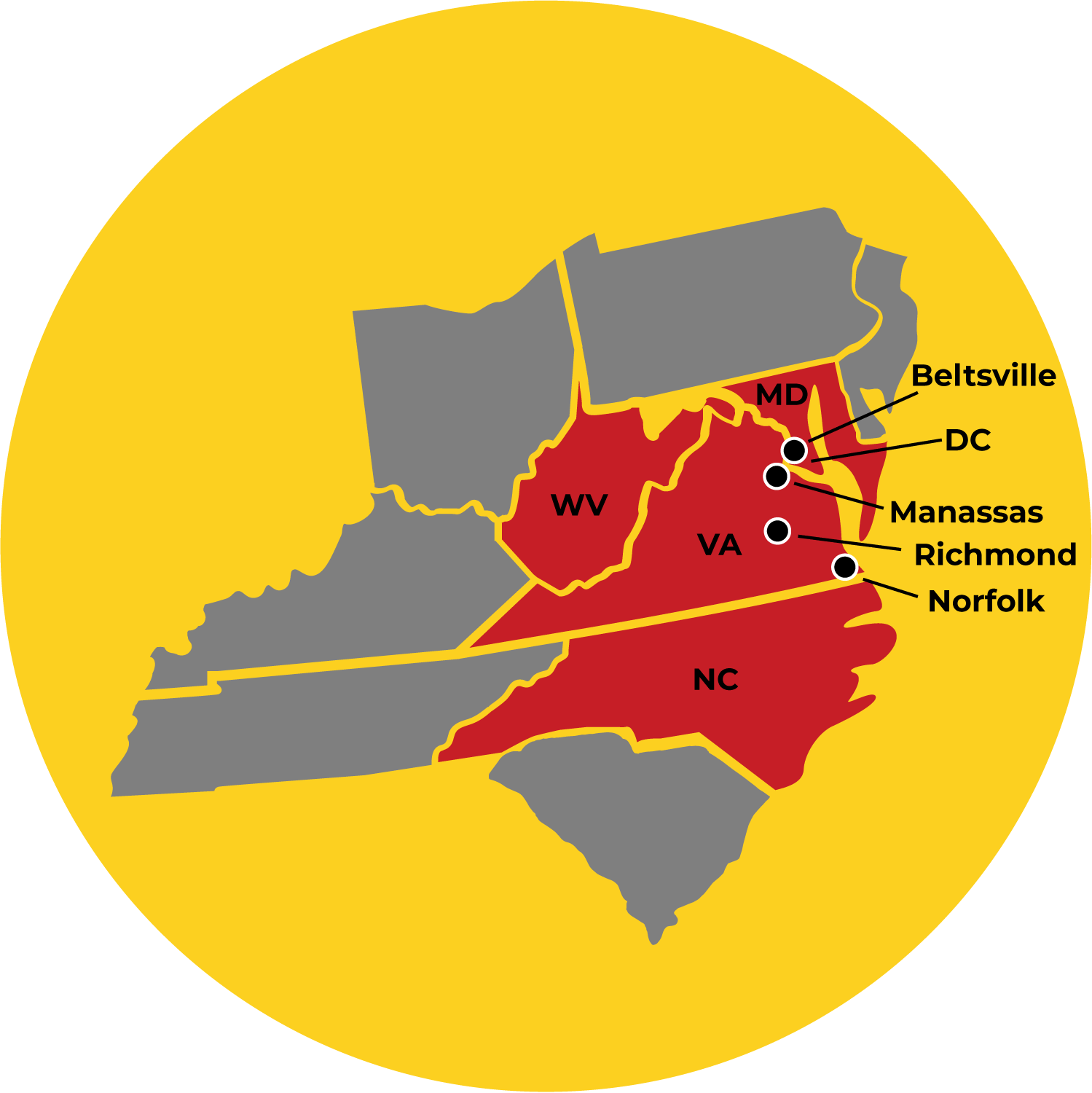
In the Mid-Atlantic region, repeated freeze-thaw cycles cause moisture beneath concrete to expand and contract. This movement can lift slabs, misalign joints, and damage adjacent pavement, requiring corrective action before conditions worsen.
Uneven or Sunken Concrete
Settlement creates trip hazards and ADA compliance violations. Uneven slabs often result from poor sub-base preparation or drainage issues, making replacement the safest option for restoring proper elevation and slope.
Drainage Failures & Water Damage
Standing water accelerates concrete breakdown and undermines sub-base stability. Improper drainage frequently leads to cracking, heaving, and joint failure, especially near curbs, gutters, and loading areas.
Heavy Vehicle or Equipment Damage
Commercial and industrial sites experience loads far beyond residential capacity. Concrete that’s not designed for trucks, forklifts, or mechanical equipment will crack, rut, or fail prematurely without proper thickness and reinforcement.