On This Page

Patching, Road & Parking Lot Pothole Repairs
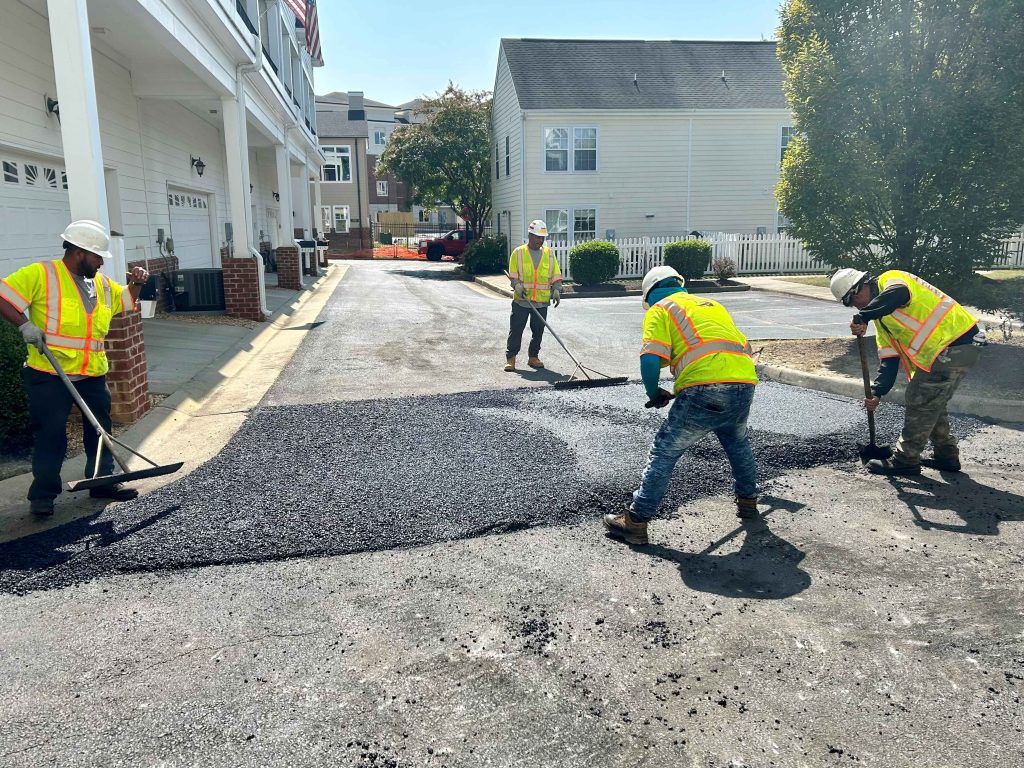
Pothole Repair
Potholes form when water infiltrates cracks in the asphalt and weakens the base. As vehicles pass over the weakened area, the surface collapses, creating a hole that continues to expand if left untreated.
Crack Filling
Cracks are one of the earliest signs of asphalt distress, but not all cracks indicate the same level of damage.
- Alligator cracking resembles a web pattern and signals structural failure in the base or subgrade, requiring reconstruction.
- Linear cracks often form from temperature changes or minor settlement.
- Block cracking appears in large rectangular patterns and is commonly associated with aging asphalt and oxidation.
Once cracking becomes widespread or structural, extensive repairs or reconstruction may be required. We work with you to ensure any pavement cracks are addressed with prompt crack filling to prevent further damage.
Slab Repair
Sunken pavement sections are typically caused by base failure, poor compaction, or drainage problems beneath the asphalt surface. These areas collect water, increase stress on surrounding pavement, and often lead to rapid deterioration.
Raveling and Surface Deterioration
Raveling occurs when asphalt aggregate loosens and breaks away from the surface. This type of deterioration reduces skid resistance, weakens the pavement, and accelerates cracking.
Drainage-Related Damage
Poor drainage is a leading cause of asphalt failure. Standing water seeps into pavement layers, weakens the base, and increases the likelihood of potholes and cracking.